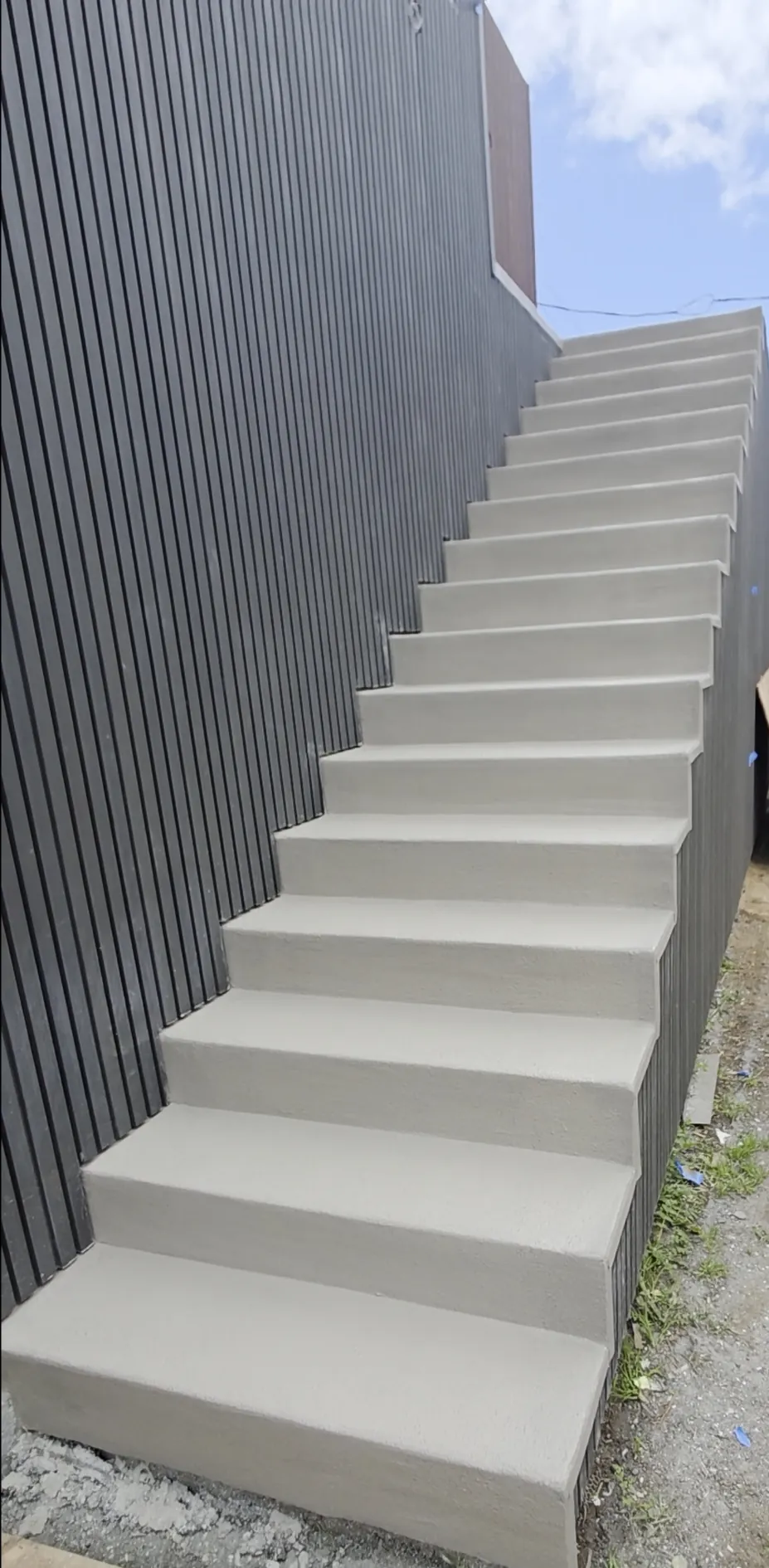
Exterior Stair Waterproofing in Venice, CA

Repair Leaking, Slippery, or Deteriorated Exterior Stairs

SPL Waterproofing provides exterior stair waterproofing, repair coordination, flashing details, and slip-resistant finish options for Los Angeles county homes and properties.

Exterior stairs can fail when water reaches unprotected wood, penetrates at tread edges or wall transitions, or becomes trapped behind aging coatings. Our team evaluates the entire stair assembly, identifies conditions that need correction, and installs a specified waterproofing system designed for the substrate, drainage path, and exposure conditions.

  • Exterior stair substrate and transition inspection
  • Flashing and water-diversion detail integration
  • Specified waterproofing membrane systems
  • Slip-resistant finish options for exterior stairs
Completed exterior stair waterproofing project in Venice, California
When to Schedule an Inspection

Signs Your Exterior Stairs May Need Repair or Waterproofing

A site inspection helps determine whether the problem is surface-level, structural, drainage-related, or a combination of conditions.

  • Condition 01

    Soft, loose, or deteriorated wood

    Soft treads, loose boards, movement underfoot, or visible deterioration can indicate that repair is needed before a waterproofing system is applied.

  • Condition 02

    Peeling, cracked, or failed coatings

    Cracks, peeling paint, blisters, or separation at tread edges may allow water to reach vulnerable areas of the stair assembly.

  • Condition 03

    Water at wall transitions or below stairs

    Stains, recurring moisture, or visible runoff near stair-to-wall connections may indicate failed waterproofing or flashing details.

  • Condition 04

    Unsafe traction during rain

    Exterior stairs that become slippery when wet may benefit from a properly specified textured or aggregate-enhanced finish.

What We Evaluate

A Stair Waterproofing Inspection Looks Beyond the Top Surface

Before recommending a scope, we evaluate the stair substrate, visible framing condition, tread and nosing details, wall transitions, drainage path, existing coating adhesion, flashing needs, and the desired finish. The goal is to identify the cause of the problem—not simply coat over it.

Inspection Scope Checklist

  • Substrate condition and attachment
  • Visible wood deterioration or areas requiring repair
  • Tread edges, nosings, and changes in plane
  • Wall-to-stair transitions and flashing requirements
  • Water-shedding details and drainage path
  • Compatibility of the selected membrane and finish system
  • Slip-resistance and maintenance requirements
Documented Project Case Study

New Exterior Staircase Waterproofing in Venice, California

A phase-by-phase documentation of a newly built exterior staircase completed in Venice, California.

This project documents the waterproofing of a newly constructed exterior wood staircase from the bare-wood stage through preparation, membrane installation, reinforced cementitious layers, texture application, and final topcoat. The project shows how the components work together as an integrated waterproofing assembly rather than relying on a single surface coating.

Project Overview Details

Project location
Venice, California
Project type
New exterior wood staircase waterproofing
Waterproofing system
Westcoat ALX System
Starting condition
Newly delivered bare-wood stair assembly
Documentation
Photographs from preparation through final topcoat
Exposure consideration
Coastal Los Angeles environment

Materials Used in the Westcoat ALX System

The following materials were identified by the installer as part of this Venice staircase waterproofing project.

A well-designed stair waterproofing system uses coordinated layers rather than a single coating. Primer prepares the substrate, flashing and sealants address transitions, membrane and reinforcement help protect the assembly, cementitious materials build the waterproof walking surface, and texture and topcoat complete the finish. Product selection, installation, coverage, and curing should follow the applicable Westcoat system requirements.

Westcoat EC-11 Primer

Primer

Stage: Surface preparation

Prepares and conditions the approved substrate so subsequent waterproofing layers can bond properly. Application should follow the Westcoat product and system specifications.

Westcoat WP-40 Sheet Membrane

Sheet membrane

Stage: Secondary waterproofing and seam reinforcement

Provides a sheet-membrane layer beneath the reinforced cementitious assembly and helps reinforce plywood seams and other specified locations.

Bonderized sheet metal

Flashing and edge metal

Stage: Water management and transition detailing

Forms custom flashing and edge details at designated transitions, helping direct water away from vulnerable stair edges, joints, and connections.

Polyurethane caulking

Joint sealant

Stage: Transition and joint treatment

Seals specified joints, gaps, and transitions where movement or changes in plane could otherwise create a path for water intrusion.

2.5 expanded metal lath

Reinforcement

Stage: Reinforced cementitious assembly

Provides reinforcement for the cementitious layers and helps the waterproofing assembly form a continuous, durable walking surface over the prepared substrate.

Galvanized staples

Mechanical fasteners

Stage: Lath and membrane attachment

Mechanically secures specified reinforcing materials to the stair assembly. Fastener type, spacing, and placement must follow the applicable system requirements.

Westcoat WP-81 Cement Modifier

Cement modifier

Stage: Cementitious layer admixture

Modifies the cementitious mix used with the specified Westcoat cement products to help produce the required application characteristics and system performance.

Westcoat TC-1 Basecoat Cement

Polymer-modified cementitious material

Stage: Base and cementitious build-up layers

Forms part of the cementitious waterproofing assembly and is used with the specified Westcoat liquid components to build the reinforced base layers.

Westcoat WP-90 Waterproofing Resin

Waterproofing resin

Stage: ALX Pro cementitious admixture

Provides the resin component used with TC-1 in the applicable ALX Pro cementitious system. Confirm that the installed project used the ALX Pro configuration before describing it this way.

Westcoat TC-2 Texture Cement

Texture coat

Stage: Surface texture and traction

Creates the specified textured surface layer. The final texture contributes to the walking-surface finish and may help provide traction when properly designed and applied.

Westcoat SC-10 Colored Topcoat

Acrylic topcoat

Stage: Final protective and decorative finish

Provides the final colored finish over the completed system. It contributes to the finished appearance and must be maintained according to the applicable product and system requirements.

Field Inspection Sequence

Venice Coastal Staircase Waterproofing Breakdown

A phase-by-phase look at how we protect bare wood stairs against moisture intrusion, wind-driven salt air, and heavy foot traffic.

01Substrate Inspection

Bare Wood Framing Baseline

We inspect bare wood treads, stringers, and risers for structural attachment, slope, and step geometry before applying any waterproofing layers. This establishes the substrate condition and identifies any framing repairs needed prior to membrane installation.

Environmental Factor:Unprotected exterior wood absorbs salt air and coastal moisture, which can accelerate framing deterioration over time.
Applied Materials / Specs:
Existing structural framingFastener reinforcement as required
Bare wood staircase side view in Venice, CaliforniaBare wood staircase top view in Venice, California

02Primary Waterproofing Layer

Sheet Membrane & Perimeter Flashing

We install custom-fabricated metal L-flashing along step margins and lay Westcoat WP-40 sheet membrane directly to prepared wood treads. This layer helps protect seams and transitions and provides a continuous base for the reinforced cementitious assembly.

Environmental Factor:Wind-driven rain can force water into stair-to-wall joints and open tread edges if transitions are not properly detailed.
Applied Materials / Specs:
Westcoat WP-40 Sheet MembraneCustom-fabricated metal L-flashingDrip edges
Westcoat sheet membrane installation on exterior stair treadsCustom metal flashing installation on exterior stair edges

03Mechanical Structural Bond

Galvanized Metal Lath Reinforcement

We fasten heavy-duty galvanized metal lath over the membrane to mechanically anchor cementitious layers and help distribute foot-traffic loads across the stair assembly.

Environmental Factor:Structural deflection and temperature swings can cause unreinforced cementitious coatings to crack over time.
Applied Materials / Specs:
Hot-dipped galvanized metal lath (approximately 2.5 lb/yd²)
Metal lath top-down view installed on stair treadsMetal lath side profile wrapping stair nosing

04Slurry & Base Coat Application

Cementitious Base and Texture Coat Application

We trowel a polymer-modified cement slurry directly into the metal lath to encapsulate the mesh, correct pitch, and create a monolithic base. Texture coats are then applied to build the desired walking-surface profile.

Environmental Factor:Uneven tread wear and poor drainage can lead to surface breakdown and localized moisture pooling.
Applied Materials / Specs:
Westcoat TC-1 Basecoat CementWestcoat WP-81 Cement ModifierWestcoat TC-3 Medium Texture Cement (as applicable)
Applying cementitious slurry coat over metal lathSide view of troweled cement base coat on stair steps

05Final Protective Finish

Epoxy Primer, Texture & Slip-Resistant Topcoat

We apply a UV-resistant topcoat system broadcast with silica quartz aggregate to provide slip resistance and weather protection. EC-11 water-based epoxy is used as a primer where specified to enhance adhesion and seal the substrate.

Environmental Factor:Intense coastal UV exposure and ocean fog can degrade unprotected surfaces and create slippery conditions when wet.
Applied Materials / Specs:
Westcoat EC-11 Water-Based Epoxy PrimerCleaned silica quartz aggregateWestcoat SC-10 Acrylic Topcoat (or specified system topcoat)
Top-down view of completed waterproofed staircase with slip resistant finishSide angle of completed Venice exterior waterproofed staircaseFront elevation view of completed exterior staircase in Venice, CA

Frequently Asked Questions

Exterior Stair Waterproofing and Repair Questions

Answers to common questions about substrate preparation, waterproofing details, traction finishes, scheduling, and maintenance.

What should be repaired before exterior stair waterproofing?

Before waterproofing, evaluate and repair soft or deteriorated wood treads, structural framing, loose fasteners, damaged flashing, and poor drainage paths. Correcting underlying substrate damage prevents premature membrane failure.

Can a newly built exterior wood staircase be waterproofed?

Yes. Newly built wood stairs can be waterproofed after inspecting framing stability, flashing details, and drainage. Proper substrate prep ensures the waterproof membrane adheres correctly to bare wood.

How do you make exterior stairs safer when wet?

Incorporate a slip-resistant aggregate or textured finish directly into the topcoat layer during application. Broadcasted silica quartz or aggregate creates a durable traction finish for wet coastal conditions.

Why are flashing and stair-to-wall transitions important?

Flashing prevents water intrusion at critical transition points where stair treads meet walls, posts, and nosings. Integrated metal flashing channels runoff away from vulnerable structural framing.

How long does exterior stair waterproofing take?

Exterior stair waterproofing typically takes 2 to 4 days, depending on repairs, weather, and cure times between system layers. An on-site inspection provides an exact project schedule.

How long will a stair waterproofing system last?

A professionally installed stair waterproofing system typically lasts 10 to 15 years with routine maintenance and re-topcoating every 3 to 5 years, depending on traffic and UV exposure.

Request a Project-Specific Evaluation

Schedule an Exterior Stair Inspection

We evaluate the stair assembly, visible substrate condition, transition details, drainage path, waterproofing requirements, and traction options before recommending a scope of work.

  • Project-specific inspection and scope discussion
  • Clear review of substrate and transition conditions
  • Specified waterproofing and finish recommendations
  • Guidance on system maintenance and expected use